The Current State of AI Regulation in the UAE.
In the sunny skyscrapers of Dubai and the vibrant innovation centers of Abu Dhabi, artificial intelligence is more than just technology; it is essential for the nation.
The United Arab Emirates (UAE) finds itself at a crucial point in its AI governance journey, combining ambitious strategies with varying guidelines instead of a single solid law. Unlike the European Union’s AI Act, which sets specific responsibilities for high-risk systems, the UAE’s approach is flexible, focusing on ethical principles and sector-specific needs rather than strict regulations.
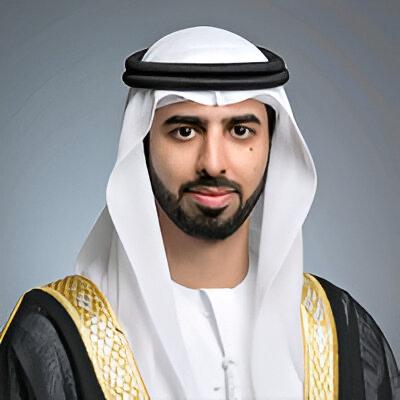
At the core of this framework is the National Strategy for Artificial Intelligence 2031, introduced in 2017 by His Excellency Dr. Omar Sultan Al Olama, then-Minister of State for Artificial Intelligence – the world’s first such appointment. This plan aims to place the UAE among the top five global AI economies by 2031, estimating AED 335 Billion ($91 Billion) in annual GDP contributions through AI integration in healthcare, finance, transport, and education. Updates in 2024 and 2025 have honed the strategy’s focus on national AI capabilities, highlighted by the launch of the UAE AI Charter in July 2024. This non-binding document presents eight principles: human wellbeing, safety, transparency, fairness, privacy, accountability, sustainability, and awareness. It draws from UNESCO’s Ethics of AI Recommendation and adjusts them for local culture and economy.
Legally, AI falls under current federal laws rather than specific legislation. The Federal Decree-Law No. 45 of 2021 on the Protection of Personal Data (PDPL), which has been effective since 2022, requires consent, data minimization, and impact assessments for AI systems that handle personal data. This aligns with global standards like GDPR but includes UAE-specific exemptions for national security. Regulations in different sectors add additional layers: the UAE Central Bank’s AI guidelines for financial institutions demand explainability and bias audits, while the Telecommunications and Digital Government Regulatory Authority (TDRA) enforces ethical AI use in digital services. In free zones such as Abu Dhabi Global Market (ADGM) and Dubai International Financial Centre (DIFC), common-law inspired rules impose stricter requirements, such as mandatory disclosure of AI risks for major deployments.
A significant moment occurred in April 2025 when the UAE Cabinet approved the world’s first AI-powered regulatory ecosystem. Named “AI Legis,” this platform uses generative AI to draft, revise, and analyze laws, bringing together various regulations into a seamless database. Early tests have simplified fintech approvals, but concerns remain about relying too much on unclear algorithms for lawmaking. The National AI Office, set up in 2023, handles enforcement by coordinating across ministries and reporting directly to the Cabinet.
This hybrid model reflects the UAE’s practical mindset: encourage innovation in a resource-limited economy while addressing risks. As His Excellency Dr. Omar Sultan Al Olama mentioned recently, “AI is not a luxury; it’s our survival strategy.”
Areas Where the UAE is Leading
The UAE is not just part of the AI race; it is changing the course. Its leadership shines in creating governance models that connect advanced technology with forward-looking policies, positioning the emirates as a Middle Eastern leader and a global testing ground.
The UAE’s creative use of AI in governance is impressive. In April 2025, the UAE Cabinet approved AI Legis, the world’s first AI-powered regulatory intelligence system meant to draft, revise, and analyze laws. This platform, which uses models that may include Falcon 2 (developed by G42 in collaboration with Microsoft), scans laws for gaps, evaluates impacts through data analysis, and suggests changes in both Arabic and English. Early uses have sped up regulatory processes. For example, it helps find legal inconsistencies for real-time updates. Specific pilots are still ongoing. This creates a layer of oversight where AI monitors AI. The World Economic Forum recognized this effort in its July 2025 Global Regulatory Innovation Platform (GRIP), which the UAE co-launched as a framework for flexible, fair policymaking.
The UAE has strong institutional support with specialized infrastructure. The Mohammed bin Zayed University of Artificial Intelligence (MBZUAI), founded in 2020 as the world’s first graduate-level AI university, graduated 104 students in its Class of 2025. This adds to an alumni base over 300 and a total student body of more than 700 from over 47 nationalities. The university ranks among the top 20 global AI institutions. It opened a new lab in Silicon Valley in May 2025. In addition, the UAE’s first AI Centre of Excellence was announced in October 2025 and is set to launch in November at AqlanX. This center, developed with the Lakeba Group, UOWD, and DoxAI, focuses on domestic AI research and development and talent cultivation. It supports the Strategy 2031 goal of full AI integration in government services by 2031. The Strategy also aims to have AI contribute up to AED 335 billion (about $96 billion) to the GDP by 2030, representing around 14% of total GDP. This includes a May
2025 partnership between G42 and the US that enables access to advanced chips, allowing up to 500,000 Nvidia H100 units each year.
On the ethical side, the UAE’s 2024 AI Charter has established regional standards. Although it has not been formally adopted by the Gulf Cooperation Council (GCC), its 12 principles promote “human-centric AI.” The charter urges bias checks in public AI deployments, placing the UAE ahead of several G20 countries in fostering transparency and fairness. In healthcare, initiatives like the Dubai Health Authority’s AI analytics have improved diagnostics. They flag 90% of normal X-rays to lower workloads, while broader efforts are cutting emergency wait times using predictive tools. These models are shared globally, including cooperation with UNESCO in Africa on AI ethics. Environmental technology has also progressed: AI-optimized irrigation in Abu Dhabi has cut agricultural water use by up to 60%, tackling water scarcity in the desert and positioning the UAE as a leader in sustainable AI.
Globally, the UAE has significant influence despite its size. It signed the OECD AI Principles and hosts the 2024 Abu Dhabi AI Week, which encourages collaboration between East and West. The UAE supports the 2023 Bletchley Declaration on AI safety. This thoughtful diplomacy, along with the May 2025 open-source release of Falcon Arabic—the top Arabic language model in benchmarks—improves AI availability for non-English speakers. This move has been praised for fostering inclusivity in the Global South. Overall, the UAE shows how smaller nations can create a meaningful global impact through ambitious and coordinated strategies.

Specific hurdles the UAE is Facing on the road to global AI leadership
As with any aspiring AI pioneer, the Emirates must address a few challenges to emerge as the global leader on AI, one that has achieved the balance between innovation and sound governance.
If there was one major challenge that the nation needs to overcome to establish itself as a clear leader in AI, it would be the effective implementation of the national AI strategy 2031. An effective implementation would involve ensuring a risk-based enforcement of AI governance is in place, while integrating AI across sectors as diverse as healthcare and transport.
As has been seen, achieving effective AI governance poses significant challenges for any nation. Crafting adaptable laws that address risks like bias, privacy breaches, and job displacement while encouraging innovation is a complex balancing act, often lagging behind rapid tech advances. Establishing independent, well-funded oversight bodies
requires massive resources. Talent shortages complicate enforcement, as expertise gaps hinder local capacity. International alignment which is crucial for cross-border AI use, needs to satisfy divergent standards such as the GDPR. These hurdles demand global cooperation and proactive adaptation.
What the Way Forward Looks Like
The UAE’s AI future is bright, depending on practical reforms that strengthen its foundations. By 2031, the goal is for the country to become an “AI-first” nation: fully automated government services, ethical guidelines integrated into every application, and a local talent engine driving global innovation.
Central to this plan is the evolution of legislation. Experts predict a Federal AI Act by 2027, turning the Charter’s principles into enforceable regulations—such as mandatory compliance checks for high-risk systems like self-driving vehicles, taking inspiration from the EU but adapting to the UAE’s innovation-friendly environment. The AI Centre of Excellence will lead this effort, launching “regulatory sandboxes” that allow startups to test AI safely, similar to Singapore’s approach but tailored for the MENA region.
Building talent pipelines is urgent. Increasing MBZUAI scholarships to 10,000 Emiratis annually, along with apprenticeships at G42, could help fill the gap. Public-private partnerships, like the 2025 agreement with Microsoft for AI education, show progress. Ethically, using blockchain for audits in AI decision-making—currently being tested in Dubai courts—could improve transparency and address bias directly.
In geopolitical terms, the UAE will deepen its partnerships. By hosting the 2026 Global AI Summit, it aims to create a “MENA AI Pact” for consistent standards, alleviating concerns over data sovereignty. Adding sustainability measures—utilizing AI to achieve net-zero goals—should attract green investments, balancing the decline of oil.
In the end, success relies on inclusion. As His Excellency Dr. Omar Sultan Al Olama envisions, “AI for all, not just the elite.” If the UAE manages to combine ambition with fairness, it could emerge as the clear global AI leader – a desert haven amid a regulatory storm.