

OSP Cyber Escape Rooms, Vanessa Porter

An escape room designed for security professionals reveals an uncomfortable truth: under pressure, expertise disappears.
The door closes. The clock starts counting down. Twenty minutes to save everything. Welcome to a cyber security escape room unlike any training session you have attended before. This is not a lecture hall. This is not a simulation on a computer screen. This is a physical room where experienced security professionals must work together to solve a crisis before time runs out.
I have watched hundreds of cyber security professionals enter this room with confidence. Twenty minutes later, they leave shaken, laughing, and asking themselves one question: “How did I not see that coming?”
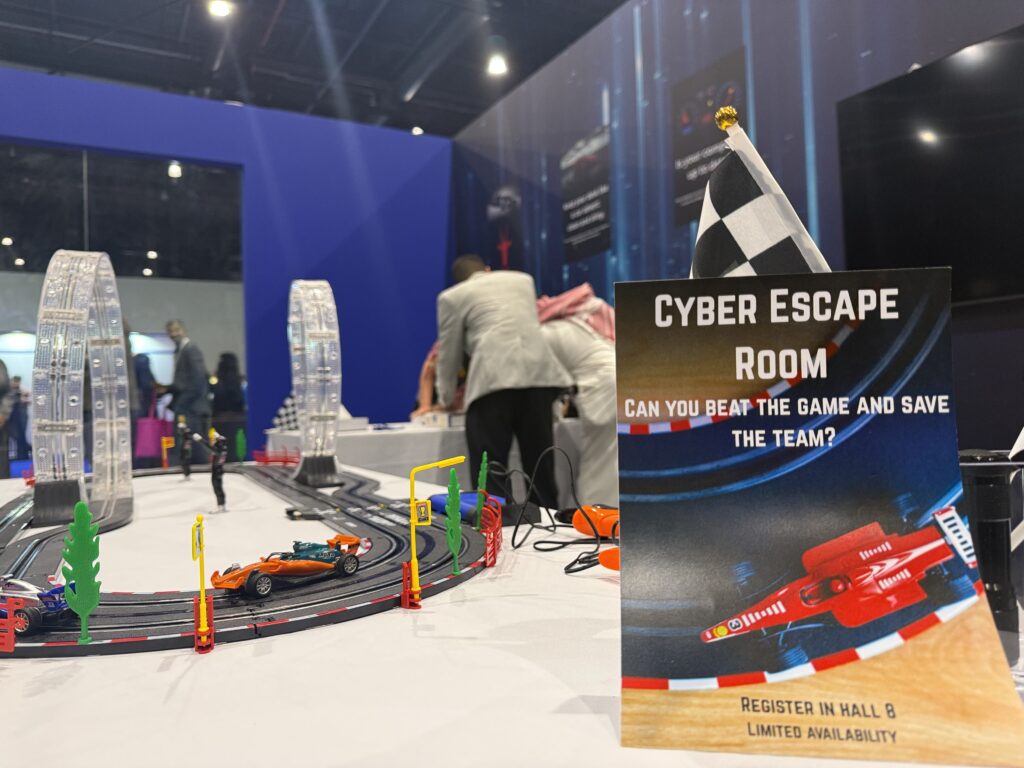
The scenario places participants inside a Formula One racing team. A cyber attack has locked them out of their systems. They have no access to their data. The race starts in twenty minutes. To restore their systems, they must find a six-digit code hidden somewhere in the room. If they fail, they lose the race and cannot exit the building. The pressure is immediate and real.
This escape room was originally designed to teach data protection and cyber security awareness to people who are not interested in security topics.
The experience makes learning fun and memorable. But something unexpected happened when we started running sessions for security professionals themselves. These are people who should know better. Chief Information Security Officers. Security operations teams. Incident response specialists. They made every mistake they teach others to avoid. What I have learned after running this experience dozens of times is this: knowledge disappears when stress arrives.
The Challenge
The task seems straightforward. Work as a team. Search the room. Find the clues. Solve the puzzles. Enter the code. Save the data. Win the race. Exit the building.
Every participant who enters the room is a security professional. Many of them are Chief Information Security Officers. Others work in security operations centers. Some lead incident response teams. These are not beginners. These are people who train others on security protocols, who design defense strategies, who know exactly what to do when systems are compromised.
Yet within minutes of entering the room, everything they know seems to vanish.

What we Observe
The first thing that happens is that rational thought leaves the room. I have watched someone walk in circles holding a book clearly labeled “Passwords” while desperately asking their teammates, “Where are the passwords?” The answer was in their hands. They could not see it. Communication breaks down immediately. Team members stop talking to each other.
They work on separate puzzles without sharing information. They find clues and put them in their pockets instead of showing the group. The team structure disappears.
One team, a group of cyber security specialists whose job is to prevent attacks, decided to become what they called “the brute force guys.“ They pulled locks apart. They tried to break open safes. They entered random number combinations hoping to get lucky. When I asked them about it afterwards, they laughed. They said, “We know the most sophisticated tactics are not always the most appropriate.“
They were right, but they missed something important. While they were busy breaking things, they ignored the simpler solutions right in front of them. They also ignored me.This happens with almost every group. I walk around the room. I offer hints. I point to objects they have missed. They do not hear me. Their focus becomes so narrow that they cannot process new information. They are trapped inside their own stress response.

The Power of Distraction
The most interesting part of this exercise is how easy it becomes to distract people. I use a technique that every security professional warns against: social engineering.
I approach someone who is close to solving a puzzle. I hand them a random object. I wink at them. They immediately stop what they are doing. They examine the object closely. They turn it over in their hands. They look for hidden meanings. They have completely forgotten what they were working on sixty seconds ago.
This should not work on security professionals. They teach others about social engineering attacks. They know that attackers use distraction and misdirection. They have sat through countless training sessions on this exact topic. Yet it works every single time.
The Security Violations
The irony becomes clear during the debrief. These security experts, who spend their days preventing breaches, make every mistake they would criticize in others.
They share passwords openly. When they find a piece of paper with login credentials, they read it aloud to the entire room. They leave sensitive information scattered around instead of securing it. They trust strangers (me) without verification. They click on things without checking if they are safe. They bypass security protocols because they are “in a hurry.“
One participant said afterwards, rushing to meet a deadline.“I just realized I do some of these things at work when I am rushing to meet a deadline.“

The Moment of Recognition
When the exercise ends, participants are energized. They have had fun. They are laughing about their mistakes. The room is full of noise and excitement. Then comes the reflection session. This is when the energy changes.
I ask them to think about what they did. How did they behave? What choices did they make? How did they work as a team?
The room becomes quiet. You can see the realization moving across faces.“I was completely distracted by something that did not matter.“ “We thought we worked well as a team, but we fell apart immediately.“ “I ignored information because I was convinced I already knew the answer.“ “ The pressure took over. I stopped thinking clearly.
The most powerful moment is when someone says,“This is what happens during a real incident, is it not? We stop thinking clearly. We make mistakes. We miss obvious signs.“ Yes. Exactly.
Why Traditional Training Fails
Most cyber security training follows a pattern. An expert presents information.Participants take notes. Everyone nods their heads. Someone asks a few questions. The session ends. People return to their desks. Two weeks later, nobody remembers what was taught. This approach fails because it does not create the conditions that exist during real security incidents.
Training rooms are calm. There is no pressure. There is time to think. The brain remains in learning mode, not survival mode. When a real attack happens, everything is different. The pressure is immediate. The stakes are real. Time is running out. This is when training should matter most. This is exactly when it fails.
The escape room works because it creates the same conditions. The brain releases specific chemicals during stressful, engaging experiences. These chemicals help information stick. When you feel the pressure, when you make mistakes, when you see the consequences, your brain remembers. More importantly, you remember how you behaved. You cannot forget the feeling of walking in circles with the answer in your hand. You cannot forget how easily you were distracted. You cannot forget how pressure made you ignore your training.
The Reality Check
Most teams complete the challenge. I provide encouragement. I offer hints. I guide them toward the solution. They escape with seconds remaining. They celebrate.Then I remind them: during a real cyber attack, I will not be there to help. And while this exercise has time pressure, real attacks are more intense. The consequences are more severe. The attackers are not offering hints.
If experienced security professionals struggle in a controlled environment with support available, what happens during a real incident? This question stays with people long after they leave the room.

The Path Forward
Security awareness training needs to change. We cannot keep teaching people in comfortable environments and expecting them to remember during crisis situations.
We need to create experiences that show people how they actually behave under pressure. The escape room is one approach. There are others. What matters is creating situations where people feel the pressure, make the mistakes, and learn from the experience while the stakes are still low.
For conference organizers and security leaders looking for training that creates lasting impact, the question is simple: do you want people to learn about security, or do you want them to learn how they behave when security matters most?
The Escape Room Teaches Both.
Check out OSP Cyber Academy Escape Room oferrings: https://ospcyberacademy.com/escape-room-training/


